
Most trades businesses that hit a slow quarter don’t have a marketing problem. They have a retention problem they’ve been misdiagnosing.
The default response is predictable: more advertising, more Google ads, more spend to bring in new customers. But the numbers tell a different story. Acquiring a new customer costs between five and 25 times more than keeping one you already have, according to Harvard Business Review. And returning customers spend an average of 67% more than first-time customers, according to Bain and Company research on customer loyalty. With referrals and a maintenance plan factored in, the lifetime value gap between a one-time job and a long-term customer relationship is significant.
The problem isn’t the pipeline. It’s the leaky bucket. And the reason it stays leaky is that most owners never define what’s actually broken before spending to fix something else.
Clarity reveals the real issue
When business slows, the instinct is to act fast. The risk is acting on the wrong assumption.
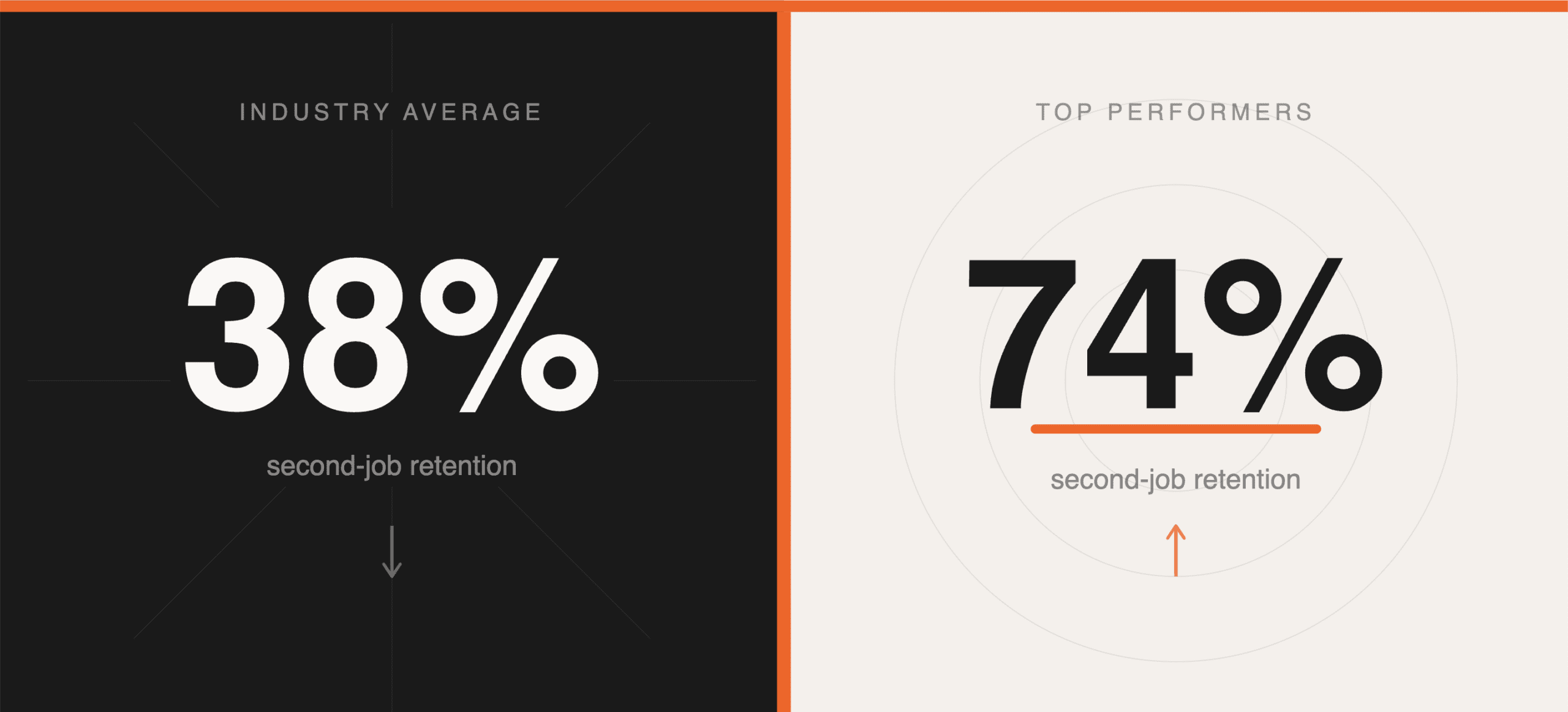
Consider a plumbing business where revenue is flat. The obvious move is more ads. But if the real issue is that existing customers aren’t rebooking because no one follows up after the service call, the ads just bring in more one-time customers who also won’t return. The industry average for second-job bookings sits at around 38%, according to home service retention benchmarks from Jolt, and acquisition costs keep climbing.
A clearer problem statement changes everything: “Our customers aren’t coming back because there’s no follow-up after the first job.” That’s a fixable system problem, not a marketing problem. And it costs a fraction of an ad campaign to solve.
Clarity stops you from spending in the wrong place
The same pattern plays out across every trade. A drop in car wash revenue triggers a push on new customer acquisition: promotions, social ads, discounts. But if existing customers are churning because they don’t know about the loyalty program, new customers will churn at exactly the same rate.
In HVAC, maintenance agreement members retain at 80 to 90%, compared to 40 to 60% for general service customers, according to ServiceTitan. The gap isn’t work quality. It’s whether the customer understands the ongoing relationship. Spending on new acquisition before fixing that is the most expensive mistake in field services. Boosting retention by just 5% can increase profits by 25% to 95%, according to research by Bain and Company published in Harvard Business Review.
Before running the next campaign, it’s worth asking: do we have a new customer problem, or a repeat customer problem?
Clarity aligns your team
Vague problems produce vague actions. Telling your team “we need more customers” gives them nothing to act on. Telling them “customers are booking once and not returning because no one follows up after the job” gives them a precise target.
For an HVAC business struggling with scheduling, the difference between “fix the scheduling process” and “customers can’t figure out how to book online so they call once and give up” is an entirely different set of solutions. One is a shrug. The other points directly to a booking tool, a mobile-friendly page, or a cleaner follow-up sequence.
The clearer the problem, the fewer the wasted hours and the faster the team can move.
Clarity leads to better solutions
Roofing companies that generate strong inquiry volume but low conversion often assume price is the issue. The real problem is usually trust: specifically, the gap between initial contact and the estimate. A homeowner who can’t quickly verify who you are, see reviews, or book a follow-up loses confidence before you’ve set foot on their property.
A more precise problem statement: “Prospects aren’t converting because they don’t have enough information to trust us before the estimate.” That opens up real solutions: making sure your reps arrive with a professional digital presence, showing testimonials and credentials at first contact, giving homeowners a direct way to lock in an appointment before doubt sets in.
Referred customers generate twice as many purchases as customers acquired through other channels, and they retain at higher rates, according to Bain and Company research on customer loyalty. That starts with the first impression being good enough to generate a referral in the first place.
How to apply this in your business
The discipline is simple, even if it’s not easy. When something isn’t working, write the problem in one sentence before doing anything else. Not “sales are down” but something specific, like “Existing HVAC customers aren’t renewing maintenance plans because we never follow up after the first service call.”
Then pressure-test it. Ask your team what objections they hear most. Ask your best returning customers why they came back. The real problem almost always surfaces faster than expected, and once you can name it precisely, the solution is usually obvious and far cheaper than what you would have spent diagnosing the wrong thing.
The first impression problem most trades businesses haven’t named yet
For field service businesses, one of the most consistently misdiagnosed problems is the moment a rep arrives on site. Most owners focus on the quality of the work, which matters. But homeowners and property managers make their trust decision before the work starts. They make it at first contact: when your rep shows up, shares their information, and either looks like a professional operation or doesn’t.
Businesses using OneTapConnect’s Identity Profile give every field rep a consistent, branded digital presence: contact details, company information, testimonials, video and photo gallery, and a direct booking link, all accessible in a single tap. It doesn’t replace the quality of the work. It makes sure the trust signal at first contact matches it.
The problem most trades businesses haven’t written down yet: their field team’s first impression varies by rep, and it’s costing jobs they’ll never know they lost.
Sources: Sources:
Home Service Customer Retention Benchmarks, Jolt, HVAC Customer Retention, ServiceTitan, The Value of Keeping the Right Customers, Harvard Business Review, The Value of Online Customer Loyalty, Bain and Company